How to Sync Inventory Between Two Shopify Stores

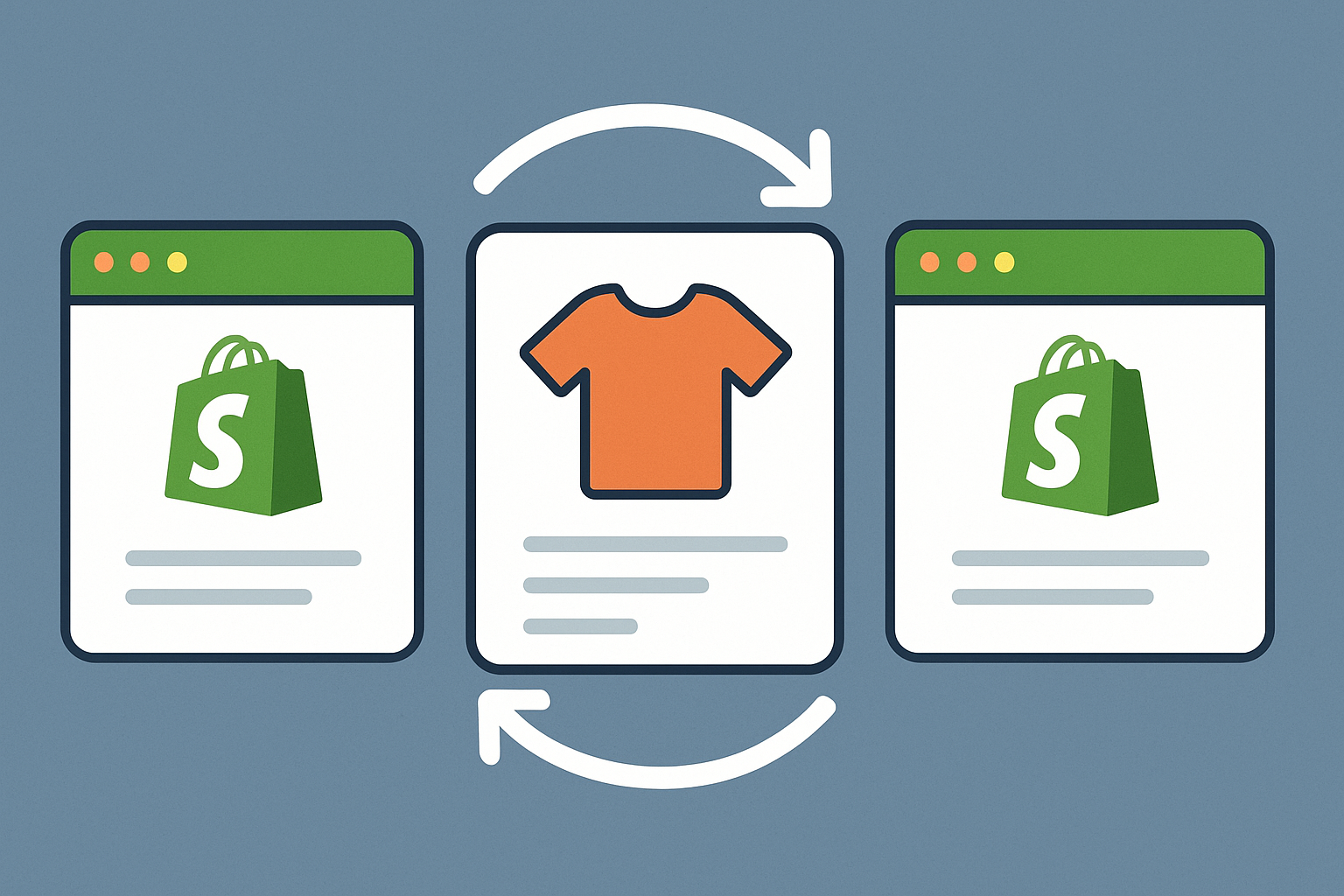
Running Multiple Shopify Stores
Running multiple Shopify stores can make sense. Maybe you’ve got one for retail customers, another for wholesale, or you sell in different regions. But the moment you split into two stores, a new headache appears: keeping inventory in sync.
Why This Matters
When stock levels or prices drift out of sync:
- One store says an item is in stock, the other says it’s not.
- Customers place orders you can’t fulfill → refunds + frustration.
- Staff waste hours manually updating numbers instead of focusing on growth.
- Customers pay the wrong prices for products.
The Problem: Shopify Doesn’t Natively Support Multi-Store Inventory Sync
Shopify is great at running a single storefront. But when you try to run two in parallel, there’s no built-in way to share inventory between them. Each store runs as a silo.
That means sellers are left patching together solutions:
- Manual exports/imports: CSV juggling between stores (slow, error-prone).
- Third-party apps: Tools like Syncio or Multi-Store Sync Power can automate updates, but often introduce latency, limitations on SKUs, or high costs.
- Custom APIs/webhooks: Powerful, but expensive to build and maintain.
Common Pitfalls
Even with apps or custom integrations, syncing isn’t always smooth:
- SKU mismatches: If products aren’t set up identically, sync breaks.
- Latency: Some apps update hourly, not instantly — enough to cause overselling during busy periods.
- Bundles/kits/variants: If you sell multi-packs or kits with multiple products under one purchase, stock tracking gets messy fast.
How We’re Tackling This at ShelfSync
At ShelfSync, we built our platform to solve the exact headaches retailers and wholesalers face when syncing inventory across multiple stores and channels. Here’s how:
Single Source of Truth
- All stock levels are centralized in ShelfSync.
- No more juggling spreadsheets or relying on manual updates.
- Every store or channel pulls from the same up-to-date inventory data, eliminating overselling.
Real-Time Sync Across Channels
- Changes in stock levels, product updates, or new SKUs propagate automatically.
- Whether a sale happens on WooCommerce, another site, or a marketplace, ShelfSync updates all relevant channels instantly.
Bulk & Smart Updates
- Add or update products once and push changes to all linked stores.
- Smart rules let you customize updates — e.g., adjusting stock differently for wholesale vs retail channels.
User-Friendly Dashboard
- All syncing operations are visible in a single dashboard.
- You can see which products are synced, pending updates, or have issues, without diving into each store individually.
Scalable for Growth
- ShelfSync is designed to handle hundreds of thousands of SKUs and multiple stores without slowing down.
- As your business grows, the same system scales — no need to rebuild processes or hire extra staff to manage inventory.
Final Thoughts
Syncing inventory between two Shopify stores isn’t easy, but it’s a solvable problem. Whether through third-party apps or custom integrations, the key is automation and a reliable source of truth.
If you’re facing the same challenge, or are struggling in wholesale, WooCommerce, or Shopify, check out ShelfSync — it’s built with this exact headache in mind.
Still managing stock the hard way?
ShelfSync keeps your products, pricing, and stock in sync without the spreadsheet chaos. Less manual work, fewer mistakes, better control.